Auto Glass Technology Explained

Blind Spot Monitoring

Changing lanes is one of the most common causes of vehicle collisions. Blind spots — the areas your mirrors can’t cover — are where most of those accidents happen. Blind Spot Monitoring is the system designed to cover those gaps, alerting you to vehicles you can’t see before you make a move.
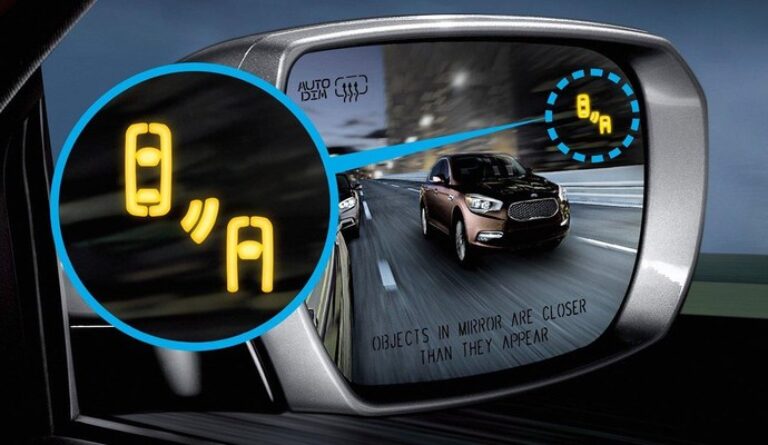



What Is Blind Spot Monitoring?

Blind Spot Monitoring (BSM) — also known as Blind Spot Detection or Blind Spot Information System — is a driver-assistance feature that uses radar or camera sensors to continuously scan the areas alongside and behind your vehicle. When another vehicle enters your blind spot, it triggers a visual warning — typically an amber or yellow indicator light on the side mirror — to alert you before you change lanes.

If you activate your turn signal while a vehicle is detected in that blind spot, the system escalates the alert: the light flashes, an audible warning sounds, and on some vehicles, the steering wheel vibrates.


How Does It Work?

  1. Detection: Sensors (radar or camera, mounted on the rear bumper or side mirrors) scan adjacent lanes continuously.
  2. Alert: When a vehicle is detected, an indicator light activates on the relevant side mirror — steady while the vehicle is present.
  3. Escalated Warning: If you signal in the direction of the detected vehicle, the warning escalates to a flashing light, audible alert, or haptic feedback.
  4. Active Assist (on equipped vehicles): Some systems can actively intervene with steering or braking to prevent a collision — typically active above 18 MPH.
  5.  


Limitations:

  • Less responsive at low speeds or in stop-and-go traffic
  • Performance can degrade in heavy rain, snow, or fog
  • May miss smaller objects like motorcycles, cyclists, or fast-moving pedestrians

What This Means for Your Auto Glass Service

BSM sensors are typically mounted on the vehicle body — not the glass itself. However, ADAS recalibration is often required after any windshield replacement to ensure all forward-facing and side-facing cameras remain properly aligned.

IQ Auto Glass provides ADAS recalibration services to ensure your safety systems function accurately after every replacement.